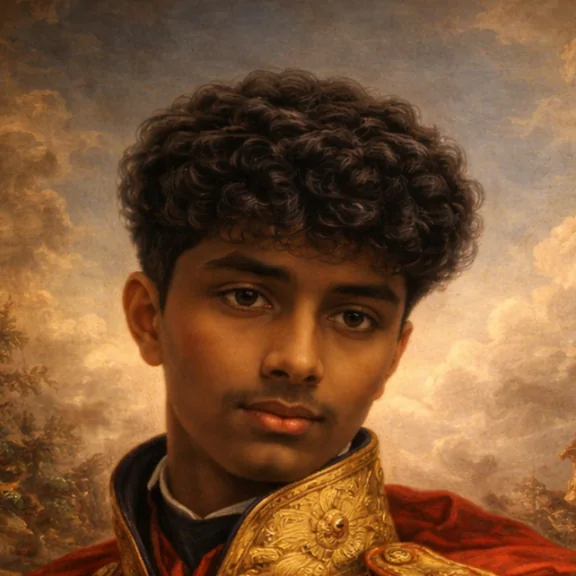
Portrait of Rishi Nalem

Machine learning researcher and builder. I study what finetuning changes inside a model, how agents can imagine a screen before they act, and how to check the work AI produces, then I ship what I learn.

RishiNalem

Pranay Rishi Nalem, Bay Area, California. Research with Yale, UC San Diego, Notre Dame, CU Boulder, George Washington University and Capital One.

Scroll to apply a task matrix T to the points on this page.

Research

Ten projects since 2023, across machine learning, formal methods, physics and aerospace. Three questions keep pulling me back: what actually changes inside a model when you finetune it, whether an agent can imagine the next screen before it clicks, and how we check what AI produces.

  1. Fig. 1Task matrices
  2. Fig. 2–3World models for computer-use agents
  3. Fig. 4Masked diffusion models
  4. Fig. 5–11Formal verification, CubeSats, biophysics, magnons, 2D materials, spintronics
  5. PapersTwo accepted, four in preparation or reported
  6. Fig. 12For fun: on the active rheology of cats

Fig. 1

A finetuned model is often one matrix away from its base

  1. BaseEach point is an embedding from a pretrained model. The classes are already in there, tangled together.
  2. Apply TA task matrix is a single linear map, fit from data, that carries base embeddings toward their finetuned positions.
  3. ResultAcross CLIP, DEiT, DINOv3, allMiniLM and RoBERTa on 15 vision and language benchmarks, a base model plus a task matrix outperformed linear probes and on some approached full finetuning.

hft ≈ T hbase

Co-author. Poster at the NeurIPS 2025 UniReps Workshop, San Diego, from research at Algoverse AI Research.

T =
Fig. 1. Synthetic embeddings drawn for illustration. The matrix shown is the one being applied to them as you scroll.

Co-author. Poster at the NeurIPS 2025 UniReps Workshop, San Diego, from research at Algoverse AI Research.

Fig. 2

Agents that imagine the next screen before they click

  1. ImagineFrom the current screen, a world model predicts what each possible action leads to, then what follows from that.
  2. Single-step trainingTaught to predict one step at a time, its imagined futures blur after about four steps.
  3. Multi-step objectiveTrained on whole rollouts, the same futures stay usable for about eight steps, with 35% less rollout error.

Research assistant, George Washington University, April to September 2026.

Usable predictionDrifting
Fig. 2. Each strand is one imagined future, flowing left to right through eight steps. An illustration of the reported horizons.

Fig. 3

Two world models for computer-use agents

Computer-use agents mostly learn by trial and error, which is slow and sometimes destructive. A world model lets an agent rehearse a plan inside its own prediction first. Two manuscripts from this work are in preparation, tentatively for ICLR 2027.

  • A latent world model that trains perception, dynamics and value in three separate phases: a LoRA-tuned vision encoder, an action-conditioned diffusion transformer, and a goal-grounded value head.
  • A text-space world model on the 7B UI-TARS-1.5 backbone that represents each screen as entity-centric, ID-referenced changes to the previous one.
  • A diagnosis: reconstruction objectives are misaligned with predictability in latent encoders. Capacity sweeps and overfit probes localized the generalization bottleneck.
Reported results
Multi-step latent prediction on AgentNet-Ubuntu+0.203, new best
Goal-grounding accuracy94%
Usable imagination horizon~4 → ~8 steps
Rollout error35% lower
Fig. 3. One observed screen and eight imagined ones for a save-as task: open the menu, choose Export, name the file, save. Past the usable horizon, predictions drift. An illustration, not model output.

Fig. 4

Language models that don’t have to write left to right

Masked diffusion models can fill in tokens in any order, so they can leave a hard word for later, once the words around it make it easy. That freedom has a price: the model must learn exponentially many fill-in-the-blank problems compared with an autoregressive model.

At Yale, in the Department of Applied Physics, I worked on cutting the training-time cost of adaptive masked diffusion models while keeping their flexible, order-agnostic decoding.

Research assistant, Yale University, January to July 2026. Extends an ICML 2025 Outstanding Paper on adaptive masked diffusion.

Left to right
Average confidence –. Least sure guess –.
Easiest first
Average confidence –. Least sure guess –.
Fig. 4. A toy decoder: common words start confident, long rare ones don’t, and every revealed neighbour helps. Small numbers mark the step each word was revealed. The name at the top of this page was revealed the same way, with English letter frequencies as confidence.

All ten projects, by date

Select a project to jump to its figure.

Fig. 5

Teaching language models to prove things a computer can check

Research lead. Industry–academic collaboration with Capital One. Fall 2026 to now.

As a high school senior, I lead a collaboration that benchmarks formal-proof verifiers for AI-generated mathematics. I’m measuring where Lean 4’s verification cost comes from relative to an LLM’s forward passes, and testing whether domain-specific verifiers for structured problems, such as information-theory theorems, can cut that cost while keeping formal guarantees.

Alongside that, I’m building a generate, verify, iterate loop that uses Lean and other verifiers to search for proofs in information theory, starting from simple theorems and scaling difficulty.

Fig. 5. Generate, verify, iterate. Steps that fail the check fall away; the ones that pass assemble into ∎, the end-of-proof mark. An illustration.

Fig. 6

Holding CubeSats in formation without fuel

First author, five-student team. February to May 2026. Accepted poster, 2026 AAS/AIAA Astrodynamics Specialist Conference (AAS 26-1032).

We tested a propellant-free, differential-drag method for CubeSat formation control. Auditing the relative-motion code, I found Schweighart–Sedwick coefficients that failed to recover Clohessy–Wiltshire dynamics as J2 goes to zero. Stroboscopic return maps and largest-Lyapunov estimates across 75 period–duty regimes then drove a new invariant-map controller.

With p = 0.289 over eight paired one-day simulations, we framed the controller result as a reproducible test, not a superiority claim. Read the paper (DOI)

LeaderFollower

Follower, seen from the leader

Drag control on: holding formation

This figure needs WebGL. The chart beside it has the results.

Fig. 6. Scroll to fly down to the pair. With drag control on, the follower traces a closed loop around the leader; off, it drifts away along its orbit. An illustration, scaled up so the motion is visible.

Fig. 7

Can proteins sense weak radio waves?

Student researcher on a seven-person team. University of Colorado Boulder. July to August 2026.

Weak radio-frequency fields (20 nT, 2–5 MHz) shift oxidative-stress responses in HT-1080 fibrosarcoma cells. To test the radical-pair hypothesis at the FAD cofactor, I modeled flavoproteins as graphs, residues as nodes and atomic contacts as edges. I owned the lab’s 4 MHz track end to end and completed the final 16.5 Hz analysis: a structural noise spectrum J(ω), a 75-setting sensitivity sweep and Laplacian eigenmodes for four proteins.

12 of 326interior residues measurably affected the FAD site
75 of 75settings where fruit-fly cryptochrome had the most isolated FAD site
70 of 75settings where the two cryptochromes ranked top two

Protein structure alone could not explain why responses flip between frequencies, so I reported model-dependent results separately.

  1. A weak radio wave reaches a cell
  2. Inside, a flavoprotein holds an FAD cofactor
  3. Only 12 of its 326 interior residues shield that site
Fig. 7. Scroll to zoom from the cell to the protein’s FAD pocket. The ribbon is drawn for illustration, not a real structure.

Fig. 8

Reading wave equations off a magnet

Research assistant, Department of Physics, UC San Diego. January to July 2026.

Remote research on magnon dynamics in CrSBr, a layered 2D antiferromagnet whose properties differ from conventional ferromagnets such as CoFeB and NiFe. I built physics-informed machine learning that classifies magnon propagation patterns and extracts governing wave equations from optical-imaging video, combining convolutional feature extraction with physics constraints.

Tap the magnet to launch a spin wave

What the model reads off the video

Wave front speed – sites per second, fitted from the points on the left.

∂²m/∂t² = v² ∇²m − γ ∂m/∂t

A damped wave equation, the kind of law the model recovers from imaging data.

Fig. 8. A toy magnet: two layers whose spins point opposite ways. A tap tips the spins, the disturbance spreads as a spin wave, and fitting its front recovers the wave speed.

Fig. 9

MonoScan: finding one-atom-thick crystals

Research assistant, Department of Physics and Astronomy, University of Notre Dame. January to April 2026.

I developed MonoScan, a computer-vision tool that identifies and classifies WSe₂ monolayers in optical microscopy images. It is in active use in the lab’s nanofabrication pipeline. CNNs trained on annotated substrate images find single-layer regions suitable for van der Waals heterostructure devices, and I analyzed monolayer domain structure and morphology.

Drag to move the sample

Monolayers found 0 of 0

Fig. 9. A synthetic sample of WSe₂ flakes on silicon oxide. Thicker flakes look bluer, then green and gold; one-atom-thick monolayers are faint, which is why a model helps find them.

Fig. 10

Computing with magnetic noise

Lead researcher, independent. July 2025 to March 2026. First place, county science fair; second place, school.

I benchmarked spin-torque nano-oscillator arrays, skyrmion memristors and vortex magnetic tunnel junctions as physical reservoir computers across 500+ OOMMF micromagnetic simulations, sweeping Gilbert damping, anisotropy and coupling. Memory capacity and error on NARMA-10 and Mackey-Glass came with bootstrap confidence intervals and hypothesis tests over 11 simulation versions, failures documented as carefully as successes. It is becoming SpinRC-Bench, a benchmarking framework now in preparation.

Live prediction error, normalized –

Fig. 10. A real 16-node echo state network running in your browser, trained to predict the next value of the chaotic Mackey-Glass series. My research swaps these simulated nodes for spintronic devices.

Fig. 11

Where it started: LLM safety, self-driving simulations and drones

Engineering research scholar, Aspiring Scholars Directed Research Program. May 2023 to 2025.

Three projects over two years: reducing hallucination, bias and toxicity in LLMs, with a side exploration of AR molecular modeling; ROS 2 autonomous-car simulations using self-organizing maps, in C++ and Python; and leading a team that built Raspberry Pi drones with ML obstacle avoidance for tree-health surveys.

  • Surveyed 0 of 50
  • Healthy 0
  • Stressed 0
  • Needs care 0
Fig. 11. Drones fly lanes over an orchard, steering around poles, and each tree’s health appears as they pass. An illustration of the tree-health survey project.

Papers and reports

  1. 1

    Testing Chaos-Assisted Passive Reconfiguration: Relative-Motion Validation, Invariant Maps, and Fair Differential-Drag Comparison

    2026 AAS/AIAA Astrodynamics Specialist Conference, Whistler, BC. Paper AAS 26-1032. DOI

    First authorAccepted poster
  2. 2

    Task Matrices: Linear Maps for Cross-Model Finetuning Transfer across Modalities

    NeurIPS 2025 Workshop on Unifying Representations in Neural Models (UniReps), San Diego. OpenReview

    Co-authorAccepted poster
  3. 3

    Structural Noise Screening at 16.5 Hz

    Research group report, University of Colorado Boulder, August 2026.

    AuthorTechnical report
  4. 4

    4 MHz track final report: protein spectral-density screening, with literature and protein extensions

    Research group report, University of Colorado Boulder, July 2026.

    AuthorTechnical report
  5. 5

    Two manuscripts on world models for computer-use agents, latent and text-space

    George Washington University. Tentatively for ICLR 2027.

    In preparation
  6. 6

    SpinRC-Bench: A Multi-Architecture Computational Framework for Benchmarking Spintronic Reservoir Computing

    Independent research.

    AuthorIn preparation
  7. 7

    On the Active Rheology of Cats: The Active Oldroyd–Felidae Constitutive Equation and a Theory of Spontaneous Egress

    A mathematical satire, July 2026. PDF, or play with it below.

    AuthorWritten for fun

Fig. 12

On the active rheology of cats

Written for fun in July 2026. Not submitted anywhere.

The Deborah number, De = λ/T, famously decides whether a cat is a liquid: if its relaxation time λ is short next to how long you watch it, T, it flows into whatever sink it sits in. But De can’t explain why a perfectly settled cat suddenly leaves.

My paper adds what’s missing: a metabolic activity field that switches on at random, active stress that pushes against the sink, and an escape number, Fe, the active work available over the sink’s barrier. Leaving the sink becomes noisy barrier crossing with memory, which gives a closed-form law for how long a cat stays. No animal experiment is proposed or required.

Shape-adapted, able to exitElastic launchShape-adapted, residentSolid-like quiescence
De = 0.1De = 110
Fe
Deborah number, De
0.30
Escape number, Fe
2.20
Regime
Shape-adapted, able to exit
Exits so far
0
Fig. 12. Drag the point across the paper’s state diagram. Low De and the cat takes the shape of the sink; high Fe and it leaves, flowing out if it’s liquid-like or launching if it’s solid-like. Startle adds a burst of activity, which only works if there’s enough escape number to spend. Click the cat to pet it.

Building

Two things I run outside the lab: an agent people can use today, and a learning platform for students who need a path, not more links.

SattvaAI

Your AI. Any app. Zero setup.

A private AI agent that operates the apps on your computer. Describe a task in plain language, typed or spoken, and SattvaAI carries out the steps on screen across browsers, office tools and creative software. Everything runs on your own machine, with no accounts, API keys or cloud.

It’s the applied side of my world-model research: an agent has to understand a screen before it can act on one safely.

  • Free
  • macOS now, Windows coming
  • Works offline
Book a table for Friday at 7 and add it to my calendar
  1. SafariOpen the restaurant’s booking page
  2. SafariChoose Friday at 7:00 pm and confirm
  3. CalendarAdd “Dinner” on Friday at 7:00 pm
  4. SattvaAIDone, without anything leaving this Mac
An illustration of how one request becomes steps on screen.

Nalem Study Circle

Free, personalized learning paths.

A learning platform I founded for students who have plenty of resources and no route through them. It turns a goal into a personalized pathway, paces study with an AI-powered focus manager, and pairs learners with a peer community that keeps them accountable.

It earned me a Conrad Innovator recognition in the Conrad Challenge at Space Center Houston, and was featured by CanvasRebel in 2025 and Bold Journey in 2026.

Nalem Study Circle’s reach, on a log scale where each step to the right is ten times more.

Projects

Built over hackathon weekends and long summers, from voice games to robot arms.

Hackathons Built in a weekend

MemoryMesh

Cal Hacks 12.0

An AI co-pilot for people living with Alzheimer’s. Real-time computer vision watches for moments of confusion, like standing at the stove with no pot or opening the fridge again and again, and a Google Home Mini responds with calm, specific voice guidance.

Computer vision, real-time behavior detection, voice interaction

WayFinder AI

LA Hacks 2025

Helps you decide where to go and what to do, whether it’s a slow Sunday at home or your first afternoon in a country where you don’t speak the language.

Recommendations, location context, conversational planning

SpeakScribe

PennApps

Turns a lecture into notes while it’s happening and summarizes photos of slides and diagrams, so students can listen instead of racing to transcribe.

Speech to text, image summarization

Earlier builds Each has a photo and a build video

Honors

Math and programming competitions

Share of the field each result placed ahead of

“Top 10 of 600 teams” means ahead of at least 590, or 98%. Bars start at zero.

Hackathons

5 wins in 20 events, including the SFBU Innovatively Inclusive Award at Viking Hacks. Attended MIT Hacks 2026, the UC Berkeley AI Hackathon 2026, Cal Hacks 12.0 and LA Hacks 2025. Joined the WaffleHacks organizing team after competing.

  • Conrad InnovatorConrad Challenge, Space Center Houston, Cyber-Security and Technology category, for Nalem Study Circle
  • First place, county science fairSpintronic reservoir computing. Second place at school.
  • School honorsComputer Science Award, Automation and Robotics Awards, Honour’s List, President’s Award List
  • CALICOCompeted at UC Berkeley’s programming contest

Education

High school diploma, expected June 2027

Mathematics dual enrollment.

Independent coursework

  • Real Analysis
  • Abstract Algebra
  • Topology
  • Complex Analysis
  • Differential Geometry
  • PDEs
  • Mechanics
  • Electricity and Magnetism
  • Quantum Mechanics

Ten MIT OpenCourseWare mathematics courses and three physics courses, plus four Stanford algorithms certificates.

Path

From a first Python script in 2018 to research labs across the country.

2018

Wrote my first Python program.

2019

Built my first Arduino robot.

2020

Competed in VEX IQ robotics.

2021

Shipped my first Flutter app. Started interning in software and data science at Alan AI and PilotCity.

2022

Built voice-enabled apps at Alan AI, including a voice-controlled Pong game for children with disabilities.

2023

Built an AI-powered robot arm with computer vision. Joined ASDRP as an engineering research scholar.

2024

Led an ASDRP team building Raspberry Pi drones with ML obstacle avoidance, and ran ROS 2 self-driving simulations.

2025

Task matrices at Algoverse, a NeurIPS workshop poster. Founded Nalem Study Circle. Started spintronic reservoir computing. Built MemoryMesh at Cal Hacks 12.0.

2026

Research at Notre Dame, UC San Diego, Yale, George Washington University and CU Boulder. First-author paper accepted at AAS/AIAA. Now leading formal-verification research with Capital One.

2027

High school diploma, expected in June.

Teaching

  • Volunteer instructor for 30+ students in Stanford’s Code in Place.
  • 100+ hours teaching middle-school VEX IQ robotics at Irvington Robotics Academy.
  • A YouTube channel on AI with 2,151 subscribers and 150,000+ views.

Industry

  • Alan AI, software and data science intern, 2021–2023. Built an AI support system that cut call wait times by 40% and web interfaces that raised FAQ self-service by 30%.
  • PilotCity. Built the main website in Vue.js and HTML; the work improved employer–intern communication by 15%.

Press and writing

Skills

Formal methods
Lean 4 and Mathlib, proof verification and benchmarking, LLM-guided proof search
Machine learning
PyTorch, TensorFlow, scikit-learn, LoRA finetuning, diffusion transformers, masked diffusion, world models, reinforcement learning, vision-language models, CNNs and OpenCV, physics-informed networks, graph models
Scientific computing
Protein graph and spectral analysis, OOMMF micromagnetics, SciPy, NumPy, ODE and hybrid-system simulation, Lyapunov exponents, Monte Carlo, ROS 2
Languages and tools
Python, C++, C, JavaScript, Vue.js, HTML and CSS, MATLAB, Flutter and Dart, Git, Linux, Raspberry Pi, Arduino

Contact

I’m open to research collaborations, internships, and long conversations about representations, agents and proofs.